



When Do You Need a Professional Land Valuation Report?
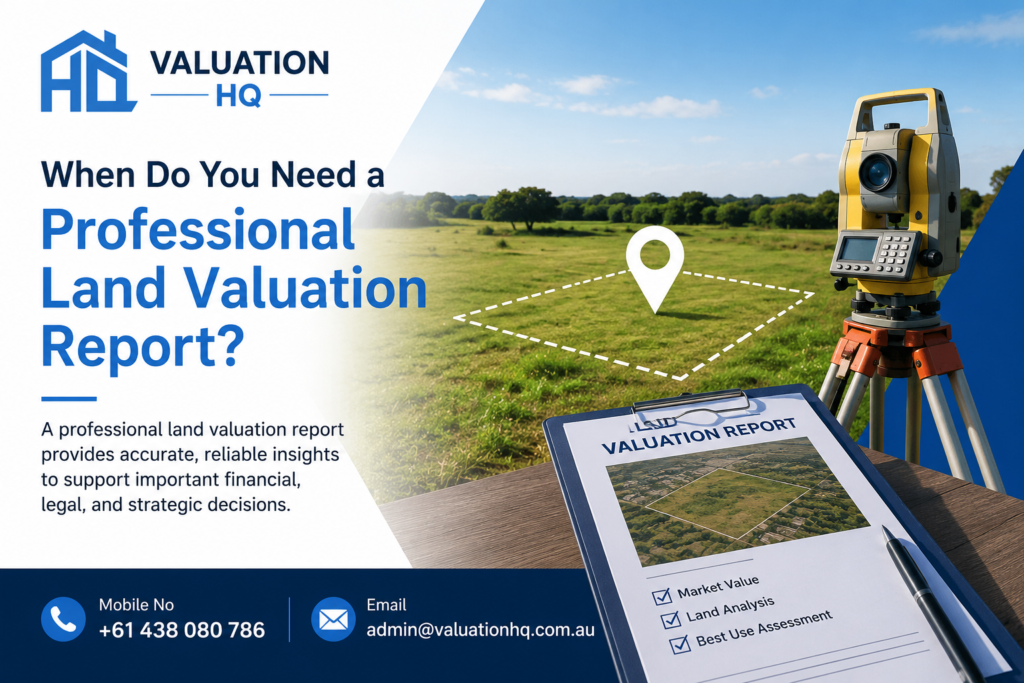
Land value sits behind more property decisions than most owners realise, from a bank assessing security for a loan to a court requiring an independent figure to resolve a dispute. Yet many property owners only consider obtaining a professional land valuation when a particular transaction makes one necessary, often without understanding why the assessment should be independent, current, and prepared by a qualified valuer rather than based on an online estimate or a recent council notice.
This guide explains what a professional land valuation report involves, the situations in which one becomes genuinely necessary rather than optional, and what separates a properly prepared report from a rough estimate that may not stand up when it matters.
SUMMARY
What This Article Covers: This guide explains what a land valuation is and how it differs from a general market appraisal or an online estimate. It covers the finance, tax, legal, and property scenarios that most commonly require a professional report, the methodology a qualified valuer applies, and what a compliant report needs to contain. It also answers the questions property owners, lenders, and their advisers ask most often before commissioning a land valuation.
What a Professional Land Valuation Report Actually Involves
A land valuation is an independent assessment of what a specific parcel of land is genuinely worth, prepared by a qualified valuer using an established methodology rather than a general impression of the local market. Depending on the purpose, the report may focus purely on the land itself, as is the case for land tax assessments, or it may consider the land together with any improvements, as required for finance, insurance, or sale purposes.
What separates a professional land valuation from an online estimate or a real estate agent’s appraisal is the depth of analysis behind the figure. A qualified valuer inspects the site, considers its zoning and permissible use, analyses genuinely comparable sales, and documents the reasoning behind the final figure in a way that can be relied upon by a bank, a court, a government authority, or any other party who needs to trust the number.
Land Value Versus Market Value
Land value refers specifically to the value of the land itself, excluding any buildings or improvements, and is the figure used for land tax and council rate purposes. Market value, by contrast, reflects what a buyer would pay for the land and any improvements together. A land valuation report may address either concept, or both, depending on why it has been commissioned.
When a Land Valuation Report Is Genuinely Necessary
Several recurring situations call for an independent, professionally prepared land valuation report rather than a rough estimate.
Bank and Lender Finance Requirements
A bank valuation of property is typically required whenever land is used as security for a loan, whether for a purchase, a refinance, or a construction facility. Lenders rely on an independent figure to confirm the security genuinely supports the amount being borrowed.
Land Tax and Statutory Assessments
In NSW, an owner who disputes the land value shown on a land tax assessment may lodge a land value objection with the NSW Valuer General, generally within 60 days of the issue date; an independent valuation may support the objection but is not stated as mandatory in every case.
Pre Purchase and Pre Sale Decisions
Buyers and sellers alike benefit from an independent land valuation before committing to a transaction, since it provides a defensible figure that is not influenced by either party’s negotiating position, unlike an agent’s appraisal prepared to support a listing.
Family Law and Deceased Estate Matters
Where land forms part of a family law property settlement or a deceased estate, a family law valuation or an equivalent independent report gives all parties, or the court, a neutral figure to work from rather than competing opinions.
SMSF Property Transactions
Self-managed super funds transferring land into or out of the fund, particularly in related party transactions, generally require an independent land valuation to satisfy both the fund’s compliance obligations and any state-based duty assessment.
Litigation, Mediation and Court-Ordered Valuations
Litigation valuations and court valuations rely on an independent land valuation report prepared to a standard that can withstand scrutiny under questioning, giving parties in a dispute, or a mediator, a defensible figure to work from.
Compulsory Acquisition and Easement Compensation
Where land is compulsorily acquired or affected by an easement, owners are entitled to compensation reflecting the land’s genuine value, and an independent valuation is essential to establishing that figure with a government authority or acquiring party.
How a Land Valuation Report Is Prepared
A qualified valuer follows a consistent methodology regardless of the purpose behind the report, adjusting the specific focus depending on what the valuation needs to demonstrate.
Site Inspection and Zoning Analysis
The valuer inspects the land directly, considers its zoning, permissible use, and any planning constraints, and notes physical characteristics such as shape, access, and topography that can materially affect value.
Comparable Sales Analysis
Genuinely comparable land sales from the same locality and timeframe are analysed and adjusted for differences in size, zoning, and condition, giving the final figure a grounded, evidence-based foundation rather than a general impression of the market.
A Clearly Documented Effective Date
Because land value can shift over time, the report states a clear effective date, ensuring the figure reflects conditions at the specific point in time relevant to the purpose of the valuation.
What to Look for in a Land Valuation Report
Not every report prepared for a land valuation purpose will meet the standard a specific transaction or dispute actually requires.
Independence and Professional Qualifications
The valuer should be independent of the transaction and hold recognised professional qualifications, particularly for related party transfers, family law matters, or any situation where independence will be scrutinised.
Clear Methodology and Supporting Evidence
A credible report explains how the valuer arrived at the final figure, referencing specific comparable sales and site characteristics rather than presenting a number without supporting analysis.
When a Land Valuation Report Is Required
● When land is used as security for bank or lender finance
● When a land tax assessment appears inconsistent with the property’s genuine circumstances
● When buying or selling land and an independent figure is needed before committing
● When land forms part of a family law settlement or a deceased estate
● When an SMSF transfers land into or out of the fund
● When a dispute requires an independent valuation for litigation, mediation or court purposes
● When land is compulsorily acquired or affected by an easement
Frequently Asked Questions
Q: What is a land valuation report?
A: It is an independent assessment of a parcel of land’s value, prepared by a qualified valuer using site inspection and comparable sales analysis. It can focus on land value alone or on land together with improvements, depending on its purpose.
Q: How is land value different from market value?
A: Land value refers specifically to the value of the land itself, excluding buildings, and is used for land tax purposes. Market value includes the land and any improvements together, reflecting what a buyer would pay overall.
Q: Do I need a land valuation for a bank loan?
A: Most lenders require an independent valuation whenever land is used as security for finance, whether for a purchase, refinance, or construction facility, to confirm the security supports the amount being borrowed.
Q: Can a land valuation report help with a land tax objection?
A: Yes. An independent report gives property owners the evidence needed to challenge an assessed land value that does not reflect the property’s genuine circumstances.
Q: Who can prepare a land valuation report?
A: A qualified, independent property valuer with recognised professional credentials should prepare the report, particularly where independence will be relied upon by a lender, court, or government authority.
Q: Does a land valuation apply to commercial and industrial land?
A: Yes. Commercial, industrial, and retail land all require the same rigorous approach to zoning analysis and comparable sales, adjusted for the specific characteristics of that type of property.
Q: How current does a land valuation need to be?
A: A land valuation report should reflect an effective date relevant to the specific purpose it serves, since land value can shift over time and an outdated report may no longer be accepted.
CONCLUSION
A professional land valuation report is not simply a formality reserved for a single type of transaction. From finance and tax matters to family law, SMSF transfers, and legal disputes, an independent, well-prepared valuation gives owners, lenders, and legal advisers the evidence needed to move forward with confidence.
Engaging a qualified, independent valuer as early as possible ensures the figure genuinely reflects the land in question and holds up wherever it needs to be relied upon.
Need a Land Valuation Report? Contact Valuation HQ
Valuation HQ prepares independent land valuation reports for property owners, lenders, accountants, and legal advisers across a full range of purposes, from finance and land tax to family law and litigation matters. Our valuers combine site-specific analysis with genuine market evidence to deliver a defensible figure every time.
Visit valuationhq.com.au | Australia Wide